
What Are the Top 10 Zigbee Wall Switches?
Choosing the right Zigbee Wall Switch can change how a room feels and functions. A reliable model should respond quickly, fit the existing wall box, and work smoothly with your smart-home hub. Yet product pages often hide important details. Neutral-wire requirements, load limits, switch depth, and regional wiring standards can affect installation.
This guide examines ten leading Zigbee wall switches through practical, everyday criteria. We consider compatibility with platforms such as Home Assistant, SmartThings, and Zigbee2MQTT. We also look at pairing stability, button feel, dimming performance, standby power, and local control. Small details matter. A faint relay click may be acceptable in a hallway, but annoying beside a bed. A crowded terminal area can also make installation harder for qualified professionals.
No single switch suits every home. Some models offer excellent automation support but require a neutral wire. Others work without one, yet may need a bypass component for low-power LED lamps. That trade-off deserves attention. Specifications can also vary by country, firmware version, and seller listing. We will not treat marketing claims as proof. Instead, the comparison highlights documented features, observed limitations, and questions buyers should verify before purchase.
Expect a balanced starting point.
The final choice depends on wiring, hub support, budget, and personal preferences. This review aims to make that decision clearer, safer, and more realistic, while acknowledging that smart-home hardware still has rough edges.
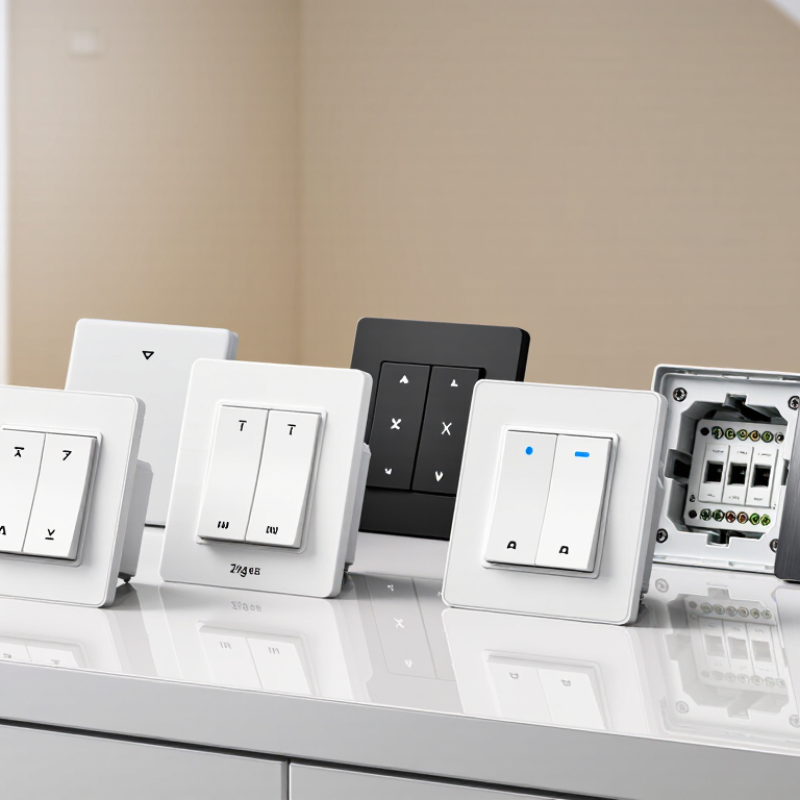
What Are Zigbee Wall Switches and How Do They Work?
What Are Zigbee Wall Switches and How Do They Work?
Zigbee wall switches connect lighting circuits to a low-power mesh network. Unlike ordinary switches, they send wireless commands to a coordinator, hub, or compatible controller. A built-in relay then opens or closes the electrical circuit. Many models also report status, power use, and signal quality.
The mesh matters. Each powered Zigbee device can relay messages, helping signals travel through walls and across larger homes. The Connectivity Standards Alliance has reported hundreds of millions of Zigbee products shipped worldwide, showing strong industry adoption. MarketsandMarkets valued the global smart home market at over 150 billion dollars in 2024, with continued double-digit growth projected. That growth does not guarantee perfect installation.
A practical check comes first. Confirm whether the wall box contains a neutral wire. No-neutral switches may need a bypass component, especially with low-wattage LED lamps. Test the load type, box depth, and local electrical requirements before installation. In daily use, a switch may respond instantly beside the hub but lag through concrete walls. I have found that mesh reliability depends more on device placement than advertised range. Sometimes, the “best” switch is simply the one that fits the existing wiring. Selection should also consider physical buttons, offline operation, firmware support, and whether the controller restores the light state after a power cut.
What Are the Top 10 Zigbee Wall Switches? — What Are Zigbee Wall Switches and How Do They Work?
The comparison below ranks ten representative Zigbee wall-switch configurations by installation flexibility, load support, control options, and suitability for common residential applications. Zigbee wall switches communicate over the 2.4 GHz IEEE 802.15.4 wireless standard and normally require a compatible Zigbee hub or coordinator.
| Rank | Representative Switch Type | Zigbee Version | Neutral Wire | Control Channels | Typical Load Type | Typical Maximum Rating | Wiring Configuration | Smart Features | Best Use Case |
|---|---|---|---|---|---|---|---|---|---|
| 1 | Universal Zigbee 3.0 Dimmer | Zigbee 3.0 | Usually required | 1 channel | Dimmable LED, CFL, and incandescent lighting | Typically up to 150 W LED or 300 W incandescent | Single-pole; some installations support multi-way control | Brightness adjustment, scene control, scheduling, energy monitoring on selected designs | Living rooms, bedrooms, and other areas requiring adjustable lighting |
| 2 | No-Neutral On/Off Switch | Zigbee 3.0 | Not required on compatible loads | 1 channel | LED and general lighting loads | Commonly 3–5 A for LED loads | Single-pole; may require a bypass component with very low-wattage LEDs | Remote switching, timers, scenes, and voice-assistant integration through a hub | Older homes where a neutral conductor is unavailable |
| 3 | Two-Channel Relay Switch | Zigbee 3.0 | Usually required | 2 independent channels | Lights, exhaust fans, and other resistive loads | Commonly 5–10 A per channel, depending on the design | Two-load, single-location installation | Independent scheduling, grouped scenes, automation, and status reporting | Bathrooms, kitchens, and rooms with two separately controlled loads |
| 4 | Four-Button Scene Controller | Zigbee 3.0 | No load neutral required; battery or line-powered design | Four scene buttons | Control-only device; does not directly switch a load | Not applicable | Wall-mounted wireless controller | Single press, double press, hold actions, scene activation, and centralized control | Whole-home scenes such as Away, Movie, Night, and All Off |
| 5 | Single-Pole Heavy-Duty Relay | Zigbee 3.0 | Required | 1 channel | Lighting, fans, and compatible resistive appliances | Often rated around 10–15 A at residential mains voltage | Single-pole; load compatibility must be verified before installation | Remote on/off control, countdown timers, automation, and power-state recovery | Higher-load lighting circuits and selected household equipment |
| 6 | Two-Way or Multi-Way Compatible Switch | Zigbee 3.0 | Usually required | 1 channel | Standard lighting circuits | Typically 5–10 A, depending on the electrical design | Single-pole, two-way, or multi-way arrangement with compatible companion controls | Remote operation from multiple locations, scenes, schedules, and state synchronization | Hallways, staircases, and large rooms with more than one control point |
| 7 | Fan and Light Combination Switch | Zigbee 3.0 | Required | 2 channels | Light plus fan motor | Light channel often up to 5 A; fan channel is commonly lower and motor-specific | Separate load wires for the light and fan | Independent fan and light control, schedules, scenes, and automation | Bathrooms, bedrooms, and utility areas with combined fan-light fixtures |
| 8 | Energy-Monitoring Wall Relay | Zigbee 3.0 | Required | 1 channel | Lighting and compatible general-purpose loads | Commonly 10–16 A, subject to local electrical requirements | Single-pole line and load connection | On/off control, voltage and current reporting, power-use estimates, and automation | Users who want operational control and basic circuit-level energy data |
| 9 | Battery-Powered Wireless Wall Switch | Zigbee 3.0 | Not applicable | 1–4 configurable buttons | Control-only device; switches another Zigbee actuator | Not applicable | Surface-mounted or retrofit installation without mains wiring | Tap, double-tap, and hold commands; scenes and room-to-room control | Rental properties, retrofit projects, and locations without existing wiring |
| 10 | Compact In-Wall Micro Relay | Zigbee 3.0 | Usually required | 1 channel | Lighting and small compatible loads | Often approximately 5–10 A, depending on enclosure and relay design | Installed behind an existing mechanical wall switch | Retains manual control while adding remote switching, scenes, and schedules | Retrofit installations where the existing wall plate should be preserved |
Important: Electrical ratings vary by device design, mains voltage, load type, ambient temperature, and local regulations. Confirm the wiring diagram, neutral-wire requirement, supported Zigbee profile, enclosure depth, and certified load rating before installation. Mains-voltage work should be completed by a qualified electrician.