
What Is a Motorized Pergola and How Does It Work?
A Motorized Pergola is an outdoor shade structure with adjustable roof louvers powered by a small electric motor. With a wall switch, remote control, or smart-home app, homeowners can change the roof angle in seconds. Open louvers admit sunlight and fresh air. Closed louvers create shade and help redirect light rain. The result feels more controlled than a fixed patio cover, especially during changing weather.
Inside the frame, a motor turns a drive shaft connected to several louvers. These linked panels rotate together, keeping the roof movement smooth and coordinated. Many systems include limit switches that stop the motor at fully open or closed positions. Some models also use rain, wind, or sunlight sensors. However, sensor performance depends on installation quality, maintenance, and local conditions. Technology helps, but it is not magic.
A well-designed Motorized Pergola can make a patio more useful for dining, relaxing, or entertaining. Aluminum frames usually resist moisture and require less upkeep than untreated wood. Still, buyers should check drainage paths, electrical requirements, wind ratings, and warranty terms before installation. A professional installer can evaluate the wall structure, wiring route, and ground level. Small mistakes may cause water pooling or uneven louver movement. That detail is easy to overlook. This guide explains how the system works, what components matter, and where practical limitations may appear. It also considers operating costs, maintenance needs, and everyday user experience, so readers can make a more informed decision rather than choosing only by appearance.
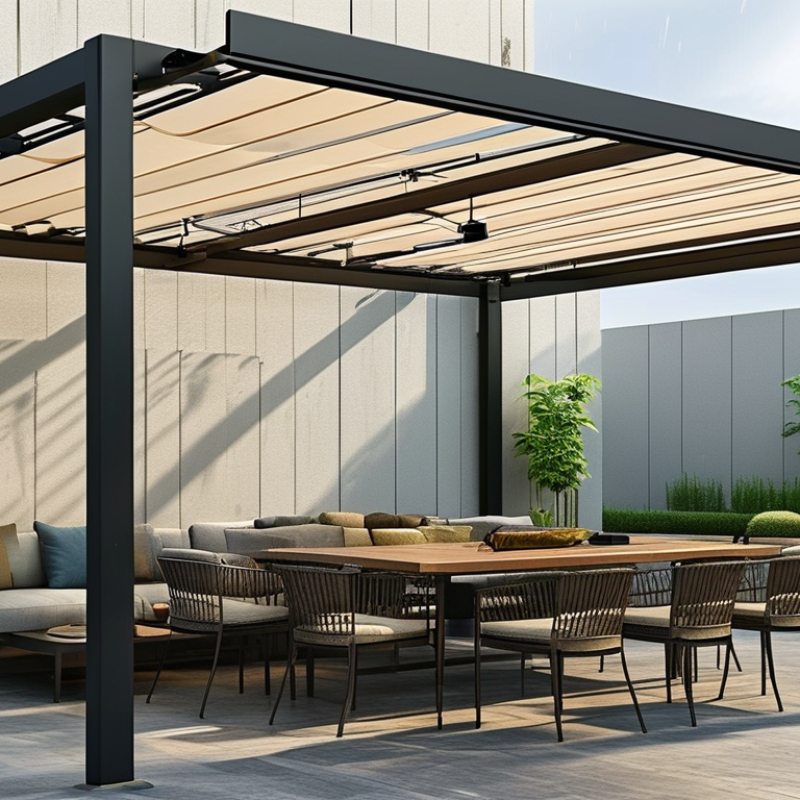
What Is a Motorized Pergola?
A motorized pergola is an outdoor shade structure with adjustable roof slats powered by a small electric motor. Unlike a fixed canopy, its louvers rotate to manage sunlight, airflow, and light rain. Pressing a wall switch, remote, or phone control changes the roof angle. Some systems also use sensors that close the louvers when rain or strong wind is detected. It is not a fully enclosed room. That distinction matters.
Most units use aluminum frames, sealed wiring, and channels that guide water toward posts and drainage outlets. During installation, the structure must stand on a level, strong base. A technician should check post anchoring, electrical connections, roof alignment, and local load requirements. From practical use, small gaps, motor noise, or slower movement in cold weather can occur. These details are normal, but poor installation can make them worse.
A motorized pergola can extend outdoor use, but it still needs care. Clear leaves from drainage channels and inspect seals after heavy weather. Keep the control system dry and test manual operation if power fails. Wind protection is often misunderstood; a closed roof does not make every structure storm-proof. I would also question glossy promises about maintenance-free operation. Moving parts eventually need inspection, even when the system looks simple.
Key Components of a Motorized Pergola
What Is a Motorized Pergola and How Does It Work?
Key Components of a Motorized Pergola
A motorized pergola uses powered louvers to control sunlight, airflow, and light rain. Its aluminum frame supports rotating slats, while a tubular motor turns them quietly through a concealed drive system. The motor usually connects to a wall switch, remote control, or smart-home platform. The system feels simple. The engineering is not.
The main components include adjustable louvers, a motor, control receiver, sensors, drainage channels, and structural posts. Wind and rain sensors can close the roof automatically when conditions change. However, sensors need proper calibration. A poorly positioned sensor may react too late or trigger unnecessarily. That small detail affects comfort and equipment life.
The International Energy Agency reports that buildings consume about 30% of global final energy and create 26% of energy-related emissions. Adjustable shading can reduce unwanted solar heat, although performance depends on orientation, glass area, and local climate. Grand View Research valued the global smart-home market at approximately $121.6 billion in 2023, showing stronger demand for connected controls. Yet automation does not replace maintenance. Tracks, seals, drainage outlets, and electrical connections still require inspection. In real installations, blocked drainage is an easy problem to overlook. A pergola may look advanced, but its reliability depends on ordinary details.
How a Motorized Pergola Operates
What Is a Motorized Pergola and How Does It Work?
How a Motorized Pergola Operates
A motorized pergola uses an electric drive system to rotate its roof louvers. With a wall switch, remote, or smart controller, you can adjust the blades gradually. Open louvers admit sunlight and airflow. Closed louvers create a tighter shield against rain and strong glare. The motor transfers power through connected gears, keeping each blade synchronized during movement.
Many systems include rain, wind, or temperature sensors. A rain sensor may close the louvers when water reaches its surface. A wind sensor can trigger an open position when gusts become unsafe. This response helps reduce pressure on the roof structure, but it is not a substitute for proper engineering. Sensor settings require careful adjustment.
During installation, the frame must sit level and anchor securely to a suitable surface. Internal channels guide rainwater toward posts, where it drains through concealed openings. I have found that small alignment errors can cause uneven movement or extra noise. The system is clever, but not perfect. Dust, leaves, and ice can obstruct drainage or strain the motor, so regular inspection matters. Check fasteners, clear the gutters, and test manual controls before seasonal storms. A qualified installer should also verify electrical connections, grounding, and weather sealing.
| System Component | Primary Function | How It Operates | Practical Considerations |
|---|---|---|---|
| Motorized Drive Unit | Moves the pergola roof louvers or retractable canopy. | An electric tubular or linear motor converts electrical energy into controlled rotary or linear movement. The drive unit turns a shaft, gears, or linked mechanism connected to the roof. | Motor capacity must match the roof size, moving load, and design resistance. The motor is normally enclosed to protect it from outdoor conditions. |
| Adjustable Louvers | Control sunlight, shade, and airflow. | Linked slats rotate to different angles. Open louvers allow more sunlight and ventilation, while closed louvers provide a more sheltered roof surface. | Adjustable louvers can reduce glare and heat, but they do not automatically make every pergola completely waterproof. |
| Control Method | Provides user commands for opening, closing, or stopping the roof. | A wall switch, handheld remote, or compatible smart-control interface sends a low-voltage or wireless signal to the control unit, which activates the motor. | Controls should be installed where they are protected from direct water exposure. Wireless range can vary because of walls, structures, and interference. |
| Control Board and Receiver | Interprets commands and manages motor operation. | The receiver accepts the control signal, while the control board directs power to the motor. Many systems include stop, reverse, and travel-limit functions. | Electrical work should follow local regulations and be completed by a qualified professional when hardwiring is required. |
| Limit-Switch System | Defines the fully open and fully closed positions. | Mechanical or electronic limits tell the controller when the roof has reached its intended travel range, helping prevent unnecessary motor movement. | Incorrect adjustment may cause incomplete closing, excess noise, or mechanical strain. Limits may need resetting after servicing. |
| Rain Sensor | Helps protect the area below the pergola from changing weather. | When moisture is detected, the sensor can send a signal to close the louvers, provided the system is configured for automatic rain response. | Rain sensors are optional on many installations. They may react to surface moisture and should not replace appropriate weather judgment. |
| Wind Sensor or Wind Protection | Reduces the risk of operating the roof in unsuitable wind conditions. | A sensor can trigger a programmed response, or the controller may prevent movement when a measured wind level exceeds its configured threshold. | Sensor settings and structural ratings vary. A pergola should not be treated as a substitute for a permanent storm shelter. |
| Power Supply | Delivers electricity to the motor and control components. | Most motorized pergolas use a mains-powered supply connected through suitable outdoor-rated wiring and protective electrical equipment. | The required voltage, circuit protection, cable routing, and grounding depend on the installation and local electrical requirements. |
| Manual Override | Allows operation or release during a power interruption or control failure. | Some systems include a manual crank, clutch, emergency release, or other method for moving or securing the roof without normal electrical control. | Not every design includes the same backup method. The available override should be confirmed before installation. |
| Gutters and Drainage Channels | Collect and direct water away from the roof perimeter. | When the louvers are closed, water can run toward integrated channels and then through downspouts or concealed drainage paths. | Drainage performance depends on correct installation, level alignment, clean channels, and the roof design. Leaves and debris should be removed regularly. |
| Weather Seals and Gaskets | Help limit water and air movement at joints. | Rubber or polymer seals compress between moving or fixed sections as the roof closes, reducing gaps around the louver edges and frame. | Seals can wear, harden, or collect dirt over time. They should be inspected and replaced when damaged. |
| Operating Sequence | Coordinates safe and predictable roof movement. | The user sends a command, the controller checks the programmed conditions, and the motor moves the roof until a stop command, limit position, or protective function is reached. | Users should keep people, furniture, and objects clear of moving parts while the roof is operating. |
| Routine Maintenance | Preserves performance and helps identify problems early. | Maintenance typically includes cleaning louvers and drainage paths, checking fasteners and seals, inspecting wiring, and testing controls and sensors. | Maintenance intervals depend on the environment. Coastal air, dust, falling leaves, and frequent operation may require more frequent inspections. |
Actual operating features, weather ratings, control options, and safety functions vary by pergola design and installation. Always follow the applicable installation and operating instructions.
Control Options and Automation Features
A motorized pergola uses an electric actuator to rotate or retract its roof panels. The control system determines how those panels respond. Most installations offer a wall switch, handheld remote, or mobile application. A wall switch works well when you want direct, dependable control. A remote adds convenience from a nearby chair. It feels simple.
Mobile applications provide finer adjustment, including partial opening and closing. Some systems also connect with voice assistants or home automation equipment. Scheduled movement can open the roof each morning and close it at night. Rain, wind, and sunlight sensors can trigger automatic responses. For example, a rain sensor may close the panels when drops reach its surface. A wind sensor can open them to reduce pressure. Automation needs adjustment.
During installation, an experienced technician should position sensors away from gutters, sprinklers, and strong reflections. Poor placement can create false commands. The control unit should include obstacle detection and a manual override. These features matter if a panel meets a branch or loses power. Power cuts expose a weakness in many automated designs. I would not rely on sensors alone during severe weather. Check the roof, wiring, drainage, and emergency operation before regular use. Even a quiet motor can hide a developing fault. That detail matters.
Benefits, Limitations, and Maintenance Requirements
A motorized pergola uses an electric tubular motor to rotate adjustable roof louvers.
A wall switch, remote, or sensor controls the opening angle. Open louvers admit daylight and airflow. Closed louvers redirect light and help shed rain, although they rarely create a completely dry room.
The benefits are practical but limited. The U.S. Department of Energy reports that exterior awnings can reduce solar heat gain by 65% on south-facing windows and 77% on west-facing windows. A pergola is not a window awning, so that figure should not be copied directly. Still, it shows why exterior shading can improve comfort.
The U.S. Energy Information Administration also identifies cooling as a major source of residential electricity use. Shading may reduce indoor heat, but results depend on orientation, roof color, climate, and glass area. Wind is the difficult part. Snow, ice, standing water, and power outages can stop normal operation.
Tips: Keep louvers clear of leaves and grit. Inspect hinges, seals, drains, and mounting points every season. Listen for uneven motor noise. It often signals friction before failure. Wash surfaces with mild soap, not abrasive chemicals. Check sensors and wiring only when power is safely isolated. A qualified technician should handle electrical faults. The honest weakness is maintenance discipline: a beautiful pergola can still deteriorate when small drainage problems are ignored.