
>

How to Choose Energy Efficient Aluminum Windows

Choosing Energy Efficient Aluminum Windows: A Practical Introduction

Energy efficient aluminum windows can improve comfort, daylight, and long-term operating costs. However, the frame alone does not determine performance. Glass selection, thermal breaks, seals, installation, and climate must work together.

Building scientist Joseph Lstiburek often describes a window as “a hole in a wall.” The phrase sounds simple. It also exposes the main design challenge: windows interrupt the building envelope. A well-designed unit can reduce heat transfer, limit drafts, and control unwanted solar gain. A poorly installed unit may still create cold edges, condensation, and rising energy bills.

Look beyond attractive finishes. Check the window’s U-factor, solar heat gain coefficient, air-leakage rating, and visible transmittance. Lower U-factor generally means better insulation. SHGC requires more judgment. In a hot climate, lower solar gain may reduce cooling demand. In a cold climate, controlled solar gain can provide useful winter warmth.

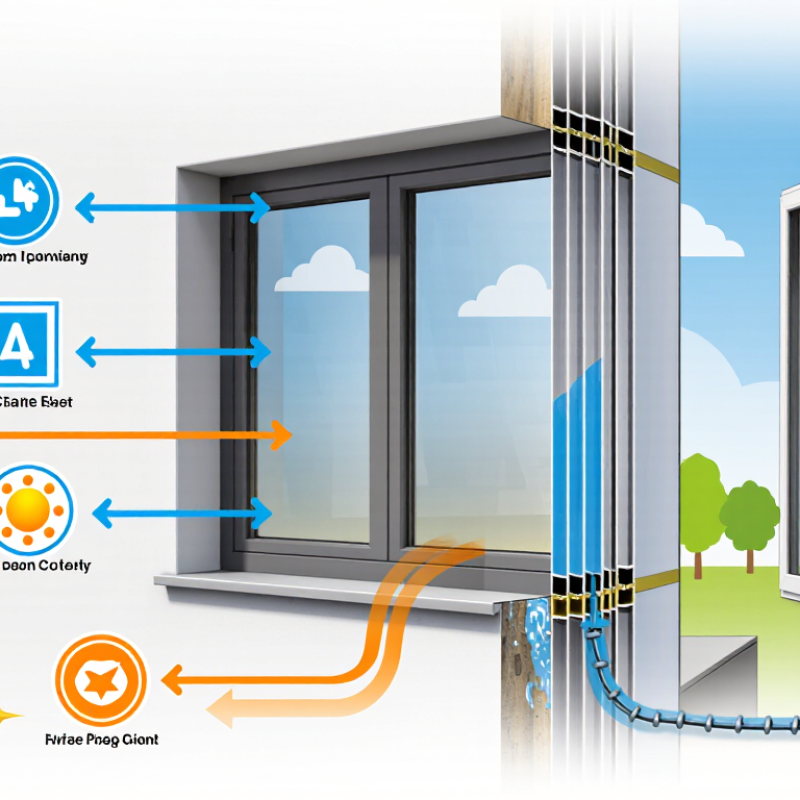
The aluminum profile deserves close attention. Polyamide thermal breaks separate the interior and exterior metal surfaces. Low-emissivity glass and insulated glazing can further improve resistance to heat flow. Yet performance can decline when installers leave gaps around the frame.

Installation matters greatly.

Review independent certification, such as NFRC ratings where applicable. Ask for tested values, not vague claims like “eco-friendly.” Also examine drainage paths, gasket quality, and the surrounding wall system. No window is perfect. Even experienced designers can overvalue laboratory ratings and underestimate site conditions. This guide explores how to compare Energy efficient aluminum windows realistically, balancing energy performance, durability, appearance, and installation quality.
How to Choose Energy Efficient Aluminum Windows

Define U-Factor Targets: Choose ≤0.30 Btu/h·ft²·°F for Efficient Windows

When choosing energy efficient aluminum windows, start with the U-factor. It measures how quickly heat passes through the complete window assembly. A lower number usually means better insulation. For efficient windows, set a target of 0.30 Btu/h·ft²·°F or lower. This target is practical for many residential projects, but local climate still matters. Cold regions may justify an even lower value.

Check the rating carefully. Some figures describe only the glass, not the frame and edge. Whole-window ratings offer a more realistic comparison. Look for independently verified performance data, including the exact window size and operating style. A large sliding window may perform differently from a smaller fixed unit. Small details matter.

Installation can weaken excellent specifications. A narrow gap around the aluminum frame may create drafts and condensation. On site, installers should keep the frame square, insulate the perimeter, and seal interior and exterior joints correctly. I have seen a low U-factor window perform poorly after rushed installation. The number alone is not enough.

Consider orientation, shading, and ventilation too. South-facing windows can gain useful winter heat, while unshaded west-facing glass may overheat rooms. Ask for the solar heat gain coefficient and air-leakage rating. Do not chase the lowest U-factor blindly. A balanced choice may cost more upfront, yet reduce cold surfaces and heating demand over time. Recheck the assumptions before ordering.

Match Solar Heat Gain Coefficient to Climate: Low-E Glass from 0.20–0.40

Choosing energy-efficient aluminum windows starts with the solar heat gain coefficient, or SHGC. SHGC measures how much solar radiation enters through the glass. NFRC rating guidance places the value on a 0-to-1 scale. A lower number blocks more sun, but it is not automatically better. Climate decides. The U.S. Department of Energy estimates that windows can represent 25–30% of household heating and cooling energy use. This makes glass selection a measurable design decision.

In hot, sunny climates, specify low-E glass around 0.20–0.25, especially on west-facing elevations. This range can reduce afternoon heat, glare, and cooling demand. In mixed climates, 0.25–0.35 often balances winter daylight with summer control. Colder, heating-dominated locations may benefit from 0.35–0.40 when passive winter sunlight is valuable. These are starting ranges, not promises. ASHRAE 90.1 climate-zone requirements still need checking. Overhangs and interior shading can change the result.

Aluminum frames need thermal breaks because glass alone cannot stop conductive heat flow. Compare SHGC with U-factor, visible transmittance, air leakage, and frame performance. A practical review should model window orientation, room use, and nearby buildings. One common mistake is choosing the lowest SHGC everywhere. A north-facing window may need a different balance than a west-facing window. I would question generic “low-E” claims without NFRC-certified values. Small details matter. Installation gaps, perimeter seals, and exposed metal can quietly undermine a good specification. The 0.20–0.40 range is useful, but local calculations remain the more honest answer.

How to Choose Energy Efficient Aluminum Windows - Match Solar Heat Gain Coefficient to Climate: Low-E Glass from 0.20–0.40

Use the solar heat gain coefficient (SHGC) range below as an early design guide for thermally improved aluminum windows. A lower SHGC admits less solar heat, while a higher SHGC admits more solar heat. Final selection should consider local energy codes, window orientation, shading, glazing area, and the complete window assembly.

Climate and Primary Objective Suggested Whole-Window SHGC Typical Low-E Glass Strategy Recommended Aluminum Window Features Orientation and Shading Guidance Primary Design Priority
Hot-humid or hot-dry climate
Cooling loads dominate for most of the year.
0.20–0.25 Solar-control Low-E coating with reduced solar transmittance. A double-glazed unit is commonly used; the exact coating position depends on the glass make-up and design requirements. Thermally broken aluminum frame, insulated spacer, durable weather seals, and low air leakage. Use the lower end of the range on east- and west-facing elevations. Exterior overhangs, fins, screens, or operable shading can further reduce unwanted solar gain. Limit cooling demand while maintaining daylight and views.
Mixed climate
Both heating and cooling are important during different seasons.
0.25–0.35 Balanced Low-E glazing that provides moderate solar control without excessively reducing useful winter solar gain. Thermally improved aluminum frame, insulated glass unit, warm-edge spacer, and properly designed frame-to-wall installation. Choose lower SHGC for strongly sun-exposed façades and consider a moderately higher value where winter sun is useful and summer shading is effective. Balance annual heating and cooling performance.
Marine or mild coastal climate
Moderate temperatures with variable solar exposure.
0.30–0.35 Neutral or moderate-solar-control Low-E glass, selected according to façade exposure and the amount of glazing. Thermally broken aluminum frame, corrosion-resistant finishes suitable for the exposure, insulated glass, and effective water management. Use exterior shading on high-solar façades. Consider the building’s glazing-to-wall ratio because large areas of glass can increase heat gain even with moderate SHGC. Maintain comfort across changing weather conditions.
Cold or heating-dominated climate
Space heating is the main annual energy concern.
0.35–0.40 Low-E glass with good insulating performance and controlled solar admission, allowing beneficial winter sunlight where overheating risk is limited. Thermally broken aluminum frame with a low whole-window U-factor, insulated spacer, high-quality gaskets, and careful installation detailing. Use the higher end of the range on sun-facing elevations when seasonal shading and interior comfort can be managed. Reduce SHGC where summer overheating is likely. Reduce heat loss while making controlled use of winter solar gain.
High-altitude or strong-sun exposure
High solar intensity can create overheating and glare even in a cool climate.
0.20–0.30 Solar-control Low-E glass with attention to glare, visible light transmission, and potential temperature differences within the glazing. Thermally broken frame, insulated glazing, reliable gaskets, and installation designed for high wind and large day-night temperature changes where applicable. Evaluate each façade separately. Exterior shading is often more effective than interior blinds for reducing solar heat before it enters the building. Control solar gain, glare, and thermal stress.

Important: SHGC is a dimensionless value from 0 to 1. The suggested ranges are practical starting points, not universal code requirements. When comparing products, use the certified whole-window SHGC and whole-window U-factor rather than center-of-glass values alone, because the frame, spacer, sash, and installation can materially affect performance.

For an accurate specification, evaluate façade orientation, local climate data, window-to-wall ratio, overhangs, interior comfort, condensation risk, visible light transmission, and the applicable local energy code.

Verify Thermal Breaks: Select Aluminum Frames with Polyamide Separators

When comparing energy-efficient aluminum windows, inspect the thermal break before the glass package. Aluminum conducts heat quickly. A polyamide separator interrupts that path between the interior and exterior frame. The U.S. Department of Energy identifies thermal bridging as a major heat-flow risk in insulated assemblies. The 2023 Global Status Report for Buildings and Construction states that buildings used about 30% of global final energy in 2022. Frame details matter.

Ask for the frame Uf value, not only the complete window Uw value. Request calculations under EN ISO 10077-2 or NFRC 100. Check the separator’s width, continuity, and mechanical engagement. A narrow strip may reduce conduction, but it cannot fix gaps or metal fasteners crossing the break. Review section drawings and test results at realistic window sizes. Larger units can perform differently. This is often overlooked.

During installation, inspect corners and drainage paths carefully. Cold interior edges can signal discontinuous insulation or poor assembly. Condensation resistance matters in humid rooms. I would not trust a glossy efficiency claim alone. The International Energy Agency’s building reports support whole-envelope assessment, not isolated product claims. Ask whether reported values include spacers, hardware, seals, and installation conditions. Even experienced teams miss this detail. Polyamide is useful, but only when the complete frame system is designed and tested as one assembly.

Check Air Leakage Ratings: Prefer ≤0.30 cfm/ft² Under NFRC Testing

When choosing energy efficient aluminum windows, check the air leakage rating before admiring the frame finish. Under NFRC testing, prefer a rating of ≤0.30 cfm/ft². This value measures how much air passes through a window at standardized pressure conditions. Lower numbers usually mean fewer drafts and less heat loss around the sash.

Look closely at the product label. Confirm that the rating applies to the complete window, not only the glass or frame. A well-sealed unit should reduce cold air near the interior edge during winter. It may also help your heating system work less often. However, this rating is not the whole energy story. Solar heat gain, U-factor, glass coatings, and frame design still matter.

Installation can weaken a good rating. Tiny gaps around the rough opening may create noticeable drafts. Use experienced installers who understand shimming, flashing, and perimeter sealing. Ask how the joint will be checked before interior trim covers it. Small details matter.

A lower rating is helpful, not magical. Local weather and building exposure should guide the final choice. In windy areas, I would inspect seals and corner joints carefully. Some specifications look impressive on paper, yet real performance can disappoint after careless installation. That possibility deserves honest attention.

How to Choose Energy-Efficient Aluminum Windows

Air leakage limits by fenestration performance class, measured in cfm/ft² under standardized testing. Lower values indicate tighter windows.

Prefer an NFRC air leakage rating of ≤0.30 cfm/ft². The chart shows maximum air leakage values associated with AAMA/WDMA/CSA performance classes: R and LC at 0.30 cfm/ft², and CW and AW at 0.10 cfm/ft². NFRC air leakage testing is reported at 1.57 psf using NFRC 400 procedures. Always verify the current product label and project requirements.

Compare NFRC-Certified Performance and ENERGY STAR Regional Criteria

Choosing an energy-efficient aluminum window starts with the whole-unit label, not the frame material alone.

NFRC certification reports tested U-factor, solar heat gain coefficient (SHGC), visible transmittance, and air leakage.

U-factor measures heat flow; lower values generally perform better.

SHGC measures solar heat entering the room. In hot, bright rooms, a lower SHGC can reduce cooling demand. The U.S. Department of Energy reports that windows can account for about 25%–30% of residential heating and cooling energy use. Small rating differences deserve attention.

Check the map. ENERGY STAR regional criteria reflect climate, so one window specification may not suit every state.

Under Version 7.0 residential criteria, typical maximum U-factors are 0.27 in Northern zones, 0.30 in North-Central and South-Central zones, and 0.40 in Southern zones.

0.27 Northern zones
0.30 North-Central and South-Central zones
0.40 Southern zones

SHGC requirements also become stricter in warmer regions, commonly reaching 0.25 in South-Central and Southern zones. North-Central products may require an SHGC of 0.40 or lower. Confirm the current regional map before ordering.

For aluminum frames, look for thermal breaks, low-emissivity glazing, and insulated spacers. These details can improve the certified result, but installation still matters.

A perfect label cannot correct gaps, poor flashing, or unsealed joints. NFRC ratings are valuable, not magical.

I would compare certified values with the actual wall orientation, shading, and window size, because real buildings rarely match laboratory conditions exactly.

Newsletter

Keep up on our always evolving product features and technology. Enter your e-mail and subscribe to our newsletter.